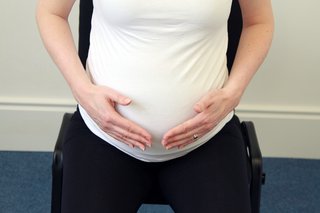
These exercises can help manage and prevent pain. They should feel comfortable to do, and not painful.
Aim to hold all the stretches for 5 to 10 seconds. Repeat 4 to 5 times.
If you are feeling discomfort:
- go more gently with the exercises
- do not stretch as far
- do not hold the stretch for as long
Pelvic tilting
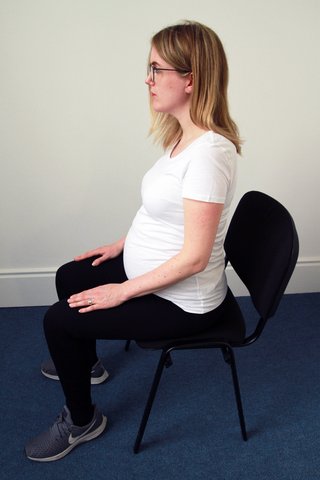
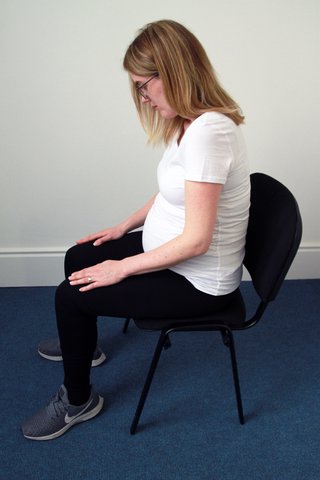
Pelvic tilting is a good way to stretch your lower back and pelvis, especially if you get a lot of lower back pain or stiffness. Do it to warm up before you start some of the other exercises. You can use a chair or a gym or birthing ball.
- Sit on a chair, or on a gym or birthing ball.
- Sit as tall as you can, emphasising the curve in your lower back.
- Slouch as much as you can, rolling back onto your tailbone.
Pelvic circles
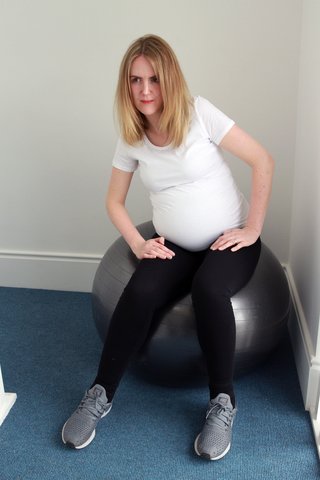
Pelvic circles help to increase flexibility around your hips and pelvis. Keep the movement small to start with and increase by small amounts as you feel comfortable. You will need a gym or birthing ball.
- Sit on a gym or birthing ball.
- Circle the ball underneath you in 1 direction.
- After making a few circles, change direction.
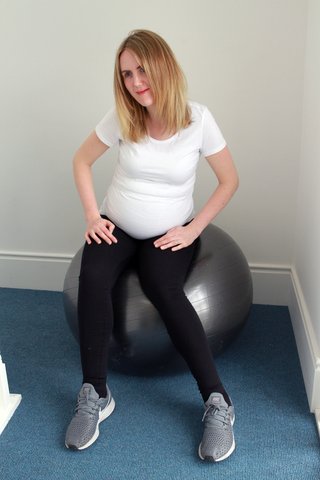
Relaxing your inner thigh muscles
Your inner thigh muscles can get tight during pregnancy, causing pain in your hips and pelvis. By relaxing your inner thigh muscles, you can help maintain hip movement. This is especially useful during labour.
- Sit on the edge of a bed or chair.
- Walk your feet apart as far as is comfortable.
- Keeping your legs relaxed, use your hands on the inside of your knees to push your knees gently apart.
- You should feel the tension ease in your inner thigh muscles.

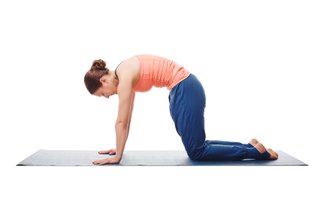
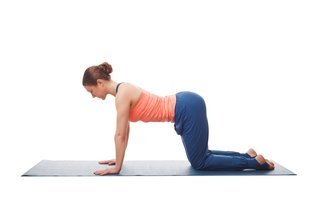
Cat cow stretch
Cat cow stretching helps to stretch the middle part of your back. It also allows the weight of your baby to fall forward and take some of the pressure off your lower back.
- Rest on all fours on the floor or your bed.
- Round your shoulders and stretch the middle part of your back up towards the ceiling.
- Lift your head and slowly arch your back in the opposite direction.
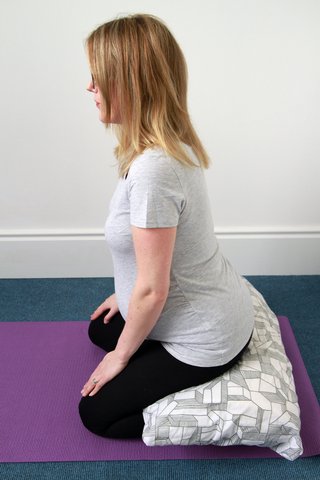
Child's pose stretch
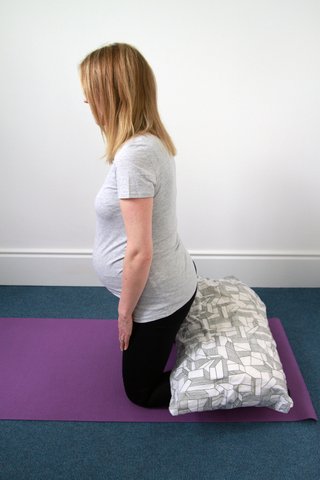
The child's pose stretch can help to relieve low back, pelvis and bottom pain.
- Kneel on the floor or on your bed.
- Sit your bottom onto your heels - using a pillow behind your knees can make it more comfortable.
- Widen your knees to allow space for your bump.
- Keep your bottom on your heels.
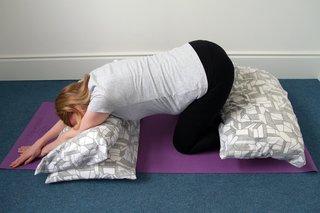
- Stretch your hands forward as far as you can comfortably - if you find this difficult, you can lean on pillows.
Child's pose side stretch
Using the child's pose stretch as above, you can stretch either of your sides. This can be helpful if you have back, pelvic or groin pain on 1 side.
- Rest into the child's pose stretch.
- To stretch your right side, reach your right hand over your left arm.
- Change sides to stretch the left side.
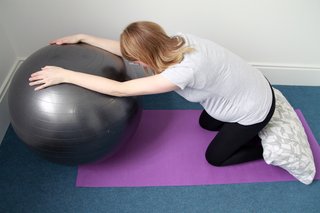
Child’s pose with a gym ball
You can do the child's pose stretch with a gym ball or birthing ball.
- Kneel on a mat on the floor.
- Move your bottom onto your heels - using a pillow behind your knees can make it more comfortable.
- Widen your knees to allow space for your bump.
- Keep your bottom on your heels.
- Place your hands on a gym ball.
- Slowly move the gym ball forwards to stretch your back and shoulders.
- Stretch to the right side to stretch the left side of your back.
- Stretch towards the left side to stretch the right side of your back.
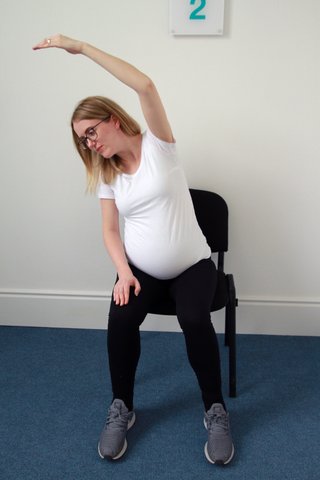
Side stretch with a chair
You can also sit and stretch your sides while sitting.
- To stretch your left side, raise your left arm overhead and reach it towards the right side.
- Take a slow and deep breath in to enhance the stretch.
- Breathe out as you return to your arm.
- To stretch your right side, raise your right arm overhead and reach it towards the left side.
Lower tummy exercise
Your tummy muscles help lift and support the weight of your baby. This can reduce the strain on your back and pelvis.
- Put your hands on your lower tummy, below your belly button.
- Breathe in normally.
- Breathe out, gently pulling your tummy muscles in and away from your hands.
- Hold for 10 seconds while still breathing.