Expressive language is the way we use language to communicate our thoughts to others.
Expressive language can be verbal, which uses speech. It can be non-verbal, which uses body language, gestures, signs, picture symbols or augmentative and alternative communication (AAC).
AAC explores ways to communicate other than with speech.
Children with expressive language difficulties can find it hard to:
- learn new words
- find the right words they want to say
- combine words in sentences
- use the correct grammar when making sentences
- tell stories
- express their needs and ideas
AAC or communication aids - iaslt.ie
How you can help with expressive language
There are things you can do to help your child develop expressive language skills.
Give extra time
When you ask your child a question, give them extra time to respond. The extra time will also help them and plan what they want to say.
Use language during play and everyday activities that your child can learn from. You can also repeat new words many times in different contexts.
Say it in the correct way
If your child uses an incorrect word or makes a grammar mistake when talking, say it in the correct way. Do not ask them to say it correctly. They will have heard the corrected version.
For example, if they say “I sawed a aeroplane”, you could say “you saw an aeroplane”.
Make longer sentences
Show your child how to make their sentences longer, by adding an extra few words. For example, if they say “look an aeroplane”, you could say “look an aeroplane in the sky”.
Ask open-ended questions or use comments to encourage responses. For example, “what happened?” “I wonder what would happen if…”.
Try to avoid asking too many questions when you are talking to your child.
If your child struggles to find a word, help them out. For example, you could ask “what type of thing is it”, “where do you find it”, “what does it look like” or “what does it do”.
Accept all types of communication
Accept verbal and non-verbal communication from your child. Let them use gestures, signs, objects, pictures and writing to support what they say.
Let them use photos, pictures, objects or writing to help them communicate with their friends - for example, to talk about their holidays.
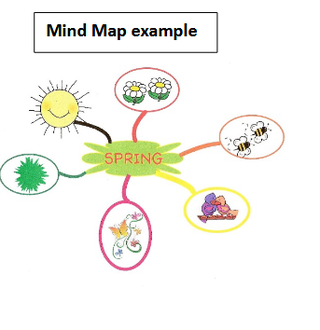
You can also use visual supports such as mind maps and story planners. These can help your child learn new words and develop storytelling skills.
Mind map
Story planner
Use a story planner with headings such as:
- when
- who
- where
- what happened
- ending
Story planner - bedslutonchildrenshealth.nhs.uk
Getting support
Talk to your speech and language therapist (SLT) for further advice on supporting a child's expressive language skills.
This content was adapted from information provided by Enable Ireland.