Thrush is a fungal infection caused by a yeast called candida. Oral thrush means that the infection is in the mouth.
Oral thrush is common in babies and in older people with dentures.
Most of the time oral thrush can be treated with medicine you can buy without a prescription.
Check if it’s oral thrush
The signs of thrush are different in children, adults and babies.
Adults and children over 12 months
Signs of oral thrush include:
- white patches or spots in your mouth that cannot be rubbed off
- a red patch that can bleed if you wipe off a white spot
- spots that join together to form larger patches - these can become yellow
- a red or sore area under your dentures
- a red and sore mouth without white spots, especially after taking antibiotics or steroids
- food does not taste the same
What oral thrush looks like
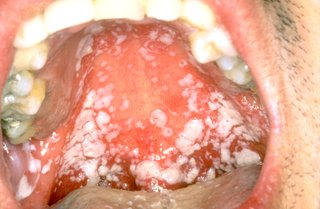
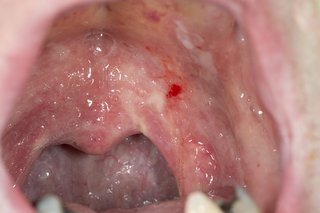
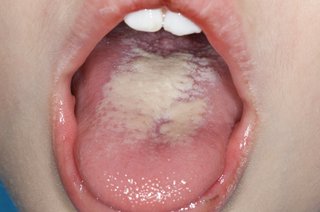
Adults may have other symptoms including:
- cracks at the corners of your mouth
- an unpleasant taste in your mouth
- pain, such as a sore tongue or gums
- difficulty eating and drinking
Babies under 12 months
Not all babies with oral thrush have symptoms.
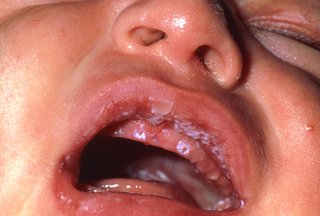
Signs of oral thrush in babies include:
- a white coating on their tongue that cannot be rubbed off
- white spots in their mouth
- not wanting to feed
- nappy rash
- dribbling more than usual - this may be because it hurts them to swallow
Oral thrush can spread through saliva from an infected child.
If you breastfeed when your baby has oral thrush, you can get a thrush infection of your nipple or areola (the circle around your nipple). This is called nipple thrush.
What oral thrush looks like in babies
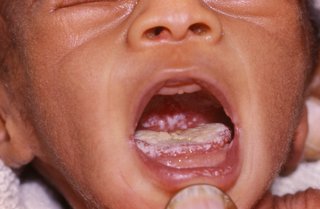
Oral thrush can sometimes be diagnosed and treated by a pharmacist through the Common Conditions Service. There is a fee for this service.
Treating oral thrush in babies and children
Contact your GP if you think your baby has oral thrush, and they are less than 1 month old.
Or contact your GP or pharmacist, if your child is over 1 month old.
They may treat your baby with:
- a liquid antifungal mouth gel (for babies age 4 months and older)
- an antifungal cream - if your baby also has nappy rash
If the infection does not clear after 7 days, your GP can prescribe other treatment.
If you are breastfeeding, your GP or pharmacist may recommend an antifungal cream for nipple thrush.
Helping your child's oral thrush at home
There are things you can do to ease your child's symptoms and stop the spread of infection.
Do
-
offer regular milk feeds - you may need to offer feeds more often if they are not taking as much as usual
-
feed them bland foods - spicy or acidic foods could sting their mouth
-
keep their hands clean so that the infection does not spread
-
sterilise soothers, dummies and any toys they put in their mouth, such as teething rings, regularly
-
sterilise any bottles and other feeding equipment regularly, especially the teats
-
wash your hands after changing nappies and before any feeds
Your child can still attend creche if they are well enough.
Treating oral thrush in adults
Adults can treat oral thrush at home with an antifungal mouth gel or liquid medicine. You can get some of these without a prescription.
Your pharmacist will tell you how to use it.
Treatment usually lasts at least 7 days. Always follow the packet instructions. Keep all medicines out of sight and reach of children.
Oral thrush in adults is not contagious, but you should treat it as soon as possible. The infection can spread to other parts of the body if it's not treated.
Non-urgent advice: Contact your GP if you:
- do not see an improvement after 1 week of treatment with an antifungal mouth gel or liquid medicine
- have oral thrush and you have difficulty or pain swallowing
There are other conditions that can cause a sore or white tongue. Some of these can be serious if not treated. If they do not get better after 2 weeks, contact your GP.
Causes of oral thrush
You or your child might get thrush if you're:
- taking antibiotics
- taking steroid inhalers for conditions such as asthma or chronic obstructive pulmonary disease (COPD)
- taking medicine that affects your immune system, such as chemotherapy
- diagnosed with a condition that weakens your immune system, such as certain types of cancer or HIV
Preventing oral thrush
There are some things you can do to help prevent oral thrush.
Do
-
brush your teeth twice a day
-
clean your dentures - read about denture care on dentalhealth.ie
-
go for regular dental check-ups, even if you have dentures
-
brush your gums, tongue and the roof of your mouth with a soft toothbrush if you have dentures
-
rinse your mouth after eating or taking medicine
-
rinse your mouth after using steroid inhalers - your GP, practice nurse or pharmacist can check your inhaler technique with you
-
go to your check-ups if you have a long-term condition such as diabetes
Don't
-
do not wear dentures overnight
-
do not wear dentures that do not fit you properly
-
do not smoke - sign up for a Quit plan
