
Problems with fingernails and toenails are common.
Your nails may also change as you get older or during an illness or pregnancy. Usually nail changes are not caused by anything serious.
There are things you can do to look after your nails and prevent problems.
Common nail problems
Common nail problems include:
- nail infections
- ingrown nails
- nail psoriasis
- injuries or other damage
Nail infections
Fungal nail infections can make your nail:
- thicker
- change colour
- brittle
- painful
- become loose and separate from the nail bed
Talk to a pharmacist if your nail is bothering you or it's painful.
Fungal nail infection: symptoms, causes and treatments
Green-black nails can be caused by overgrowth of bacteria called pseudomonas. It can happen if your hands are often exposed to water or chemicals.
Contact your GP if you have a green-black nail. They can check if it is an infection and recommend any treatment.
Ingrown toenails
An ingrown toenail is a common problem where the nail grows into the toe. Your toe may be painful or swollen.
Ingrown toenail: symptoms, causes and treatments
Nail psoriasis
Psoriasis is a skin condition that causes red patches of skin. The patches are dry and flaky (scaly).
Nail psoriasis can cause your nails to:
- develop tiny dents or pits
- change colour or shape
- become loose and separate from the nail bed
- crumble - this only happens in severe cases
- have a red or yellow drop or oil drop under the nail
Psoriasis: symptoms and diagnosis
Injuries or other nail damage
Most damage to nails has a clear cause, such as:
- an injury
- biting your fingernails
- picking at the skin around your fingernails
- not cutting your nails often enough
- cutting your nails at an angle
- using a sharp object to clean under your nails
- contact with chemicals
- your hands often being in water
- using a lot of nail varnish
- an allergic reaction to nail cosmetics
- warts around the nail
After an injury your nail may bruise, change colour and fall off.
Fingernails grow back within 6 months. Toenails can take up to 18 months to grow back.
Paronychia
Painful, red and swollen skin around the nail is sometimes called paronychia. It happens more often if your hands are in water for a long time or come into contact with chemicals. For example, if you work as a cleaner, bartender or fishmonger.
Swelling can affect 1 or more fingers. Your nail plate becomes thickened and ridged as it grows. The nail may become yellow or green and brittle.
Preventing and treating nail problems
There are things you can do to prevent problems and care for your nails.
Do
-
wear gloves when you work with water or cleaning products
-
clean your nails with a soft nailbrush instead of a sharp object
-
use hand cream on your fingernails and fingertips often
-
cut your toenails and fingernails often - nails may be softer after a shower or bath
-
cut straight across the nail and not down the sides
-
cut injured, loose nails back to where they detach - this helps the nail to grow back well
-
treat any fungal infections on your skin, such as athlete's foot
-
ask your pharmacist about products that can help with nail biting or skin picking
-
wear shoes with enough room for your toes - especially during exercise
-
get help to quit smoking - smoking can cause yellow nails and other skin changes
When to get help for nail problems
Talk to a pharmacist if the look of your nail bothers you or it's painful. They can recommend products to use or tell you if you need to see a GP.
Podiatrists and chiropodists are specialists who treat the foot and toenails. Your GP may be able to refer you for podiatry or chiropody. You can also pay privately to go to a podiatrist or chiropodist.
Non-urgent advice: Contact your GP if you:
- notice a new black line or a new black spot under your nail
- do not know why a nail has changed shape, changed colour or fallen off
- have very sore, red, swollen and warm skin around your nail
- have green-black nails
- have nail changes and other symptoms that worry you
Non-urgent advice: Go to a podiatrist or chiropodist if you:
- cannot cut your toenails - the nails are too tough or you cannot reach them
- need treatment for an ingrown toenail
Chiropody services
You may be able to get free chiropody services if you:
- have a medical card and you are age 65 or over
- live with a condition such as diabetes or arthritis
- have a health amendment act card
- have a disability
Your GP, public health nurse or local health office can tell you about chiropody services in your area.
Health reasons for nail changes
There are many things that can affect the colour, shape or strength of your nails. You may only notice changes to your nails a few months after an illness.
Changes to all of your nails that do not go away are more likely to be a sign of an underlying condition.
Conditions that can cause nail changes include:
- iron deficiency anaemia or malnutrition
- skin conditions such as lichen planus or eczema
- poor circulation or Raynaud's
- overactive thyroid (hyperthyroidism)
- underactive thyroid (hypothyroidism)
- haemochromatosis
- lupus erythematosus
- type 1 diabetes or type 2 diabetes
- damage to your airways (bronchiectasis)
- liver or kidney problems
Some medicines can also cause nail changes. You can check the patient information leaflet to see if a medicine you take causes nail changes.
How to find your patient information leaflet online
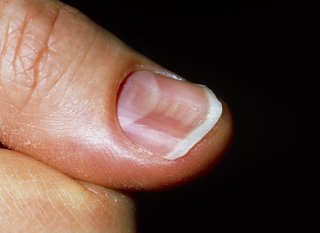
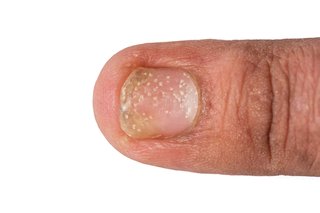
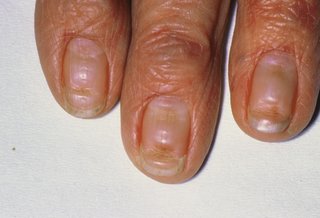
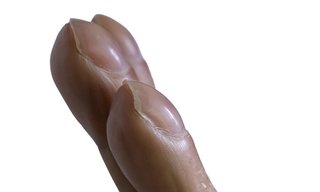
Types of shape changes
Types of colour changes
Colour changes that happen because of health conditions or treatments include:
- white nails with reddened or dark tips (Terry's nails)
- parallel white lines that extend all the way across the nails (Muehrcke's lines)
- fingernails that are half white and half brown (half-and-half fingernails)
- thick, yellow nails with swelling in your limbs and breathing problems (yellow nail syndrome)
- dark stripe in 1 nail only that changes - can be a sign of a type of skin cancer called subungual melanoma
But many colour changes are not a sign of a health condition, for example:
- white spots or streaks
- dark stripes in several nails (melanonychia) - this is common in adults with black skin
- red or brown streaks under a nail (splinter haemorrhages)
