Expressing breast milk means gently releasing milk from your breasts, either by hand or with a breast pump.
Many mothers find expressing milk a bit tricky at first. It takes time to learn how to do it.
What to expect when expressing milk at first
For some women, it may be important to to collect and store colostrum before their baby is born.
In the early days of your baby’s life, it's very normal to only get a few drops of colostrum. At this stage, your baby’s tummy is very small and they do not need a large amount.
The way you feel emotionally will have an impact on how well you express your milk. Do not worry if you find it hard at times.
When you are breastfeeding or expressing breast milk, your milk flow is caused by:
- hearing your baby cry
- the sight, feel and smell of your baby
- your baby attaching to the breast and sucking
This is known as the let-down reflex. When expressing, you may not have this so you may need some extra support.
Tips for expressing
If you are breastfeeding a healthy baby, wait until your breast milk supply is established (at around 4 to 6 weeks) before you start to express milk. This allows your milk supply to adapt to your baby's needs.
Sometimes expressing before this time can lead to a problem with oversupply.
It is best to express by hand at first and move onto using a pump when your milk supply increases.
Many mothers may choose to never use a pump when breastfeeding is going well. Some may choose hand expressing if they wanted to have additional milk to feed or to relieve breast fullness.
Find a comfortable place to express
If you’re still in the hospital, you may feel more relaxed with the bed curtains pulled across. If you prefer more privacy, there are lactation rooms in many maternity and neonatal units.
It can be useful to have your partner or support person with you when your midwife shows you how to express milk.
If you'd like some extra privacy, face away from a window or the place where the bed curtains open.
If you're at home with older children, distract them with a safe activity that does not need your full attention.
Minimise distractions by turning off your phone, TV and laptop. Listening to relaxing music can also help.
What you will need
Make sure you have everything you need to hand.
This could include:
- a drink
- a snack
- a small towel - to cover up and dry any spillages
Connect with your baby
It can be helpful to close your eyes and imagine your baby is feeding at your breast.
Looking at a photo or video of your baby can help you relax and connect with your baby before you begin expressing. Having their clothing or blanket with you can also help.
Before expressing, you could also spend some time together in skin-to-skin contact.
Warmth
It may help to take a warm shower or put a moist, warm face cloth (compress) on your breasts before expressing.
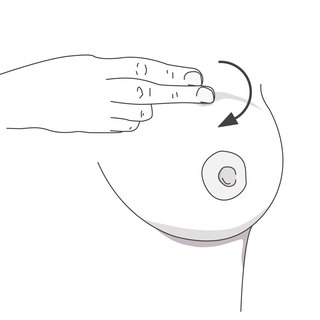
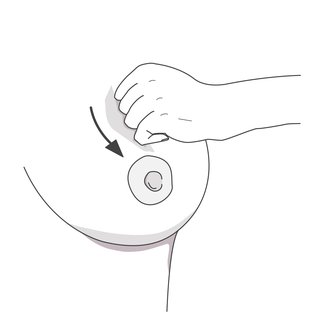
Massage your breasts
Massage your breasts before and during expressing. You can massage your breasts while in the shower.
Gently rolling your nipple between your fingers helps the release of hormones and gets your milk flowing.
Expressing milk by hand
Midwife Rebecca O'Donovan shows Mums how to hand express milk (video)
To express by hand, follow these steps:
- Wash your hands carefully.
- Try expressing after a bath or shower. The warmth may help the flow of milk. You can also put a warm compress on your breasts
- Massage your breasts. This can be done with your fingertips or by rolling your closed fist over your breast towards the nipple.
- Start with a gentle breast massage. Stroke from the back of your breast towards the nipple. This helps the flow of milk. Gently roll your nipple between your fingers.
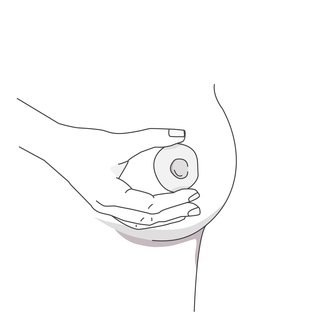
- Your fingers should be well back from your nipple, on the outside of your areola. They should not tug or drag on your nipple.
- Gently press your finger and thumb pads (not your fingertips) back toward the chest wall into the breast tissue, then press and hold fingers together for a few seconds (compress).
- Repeat this process in a rhythm (press-compress-release). Do not squeeze or pinch your nipple.
- Collect colostrum or milk in the container as recommended by your lactation nurse, midwife or PHN.
- Follow the guidelines on storing milk safely.
If these tips fail, try feeding your baby on 1 breast while expressing from the other side. This usually works.